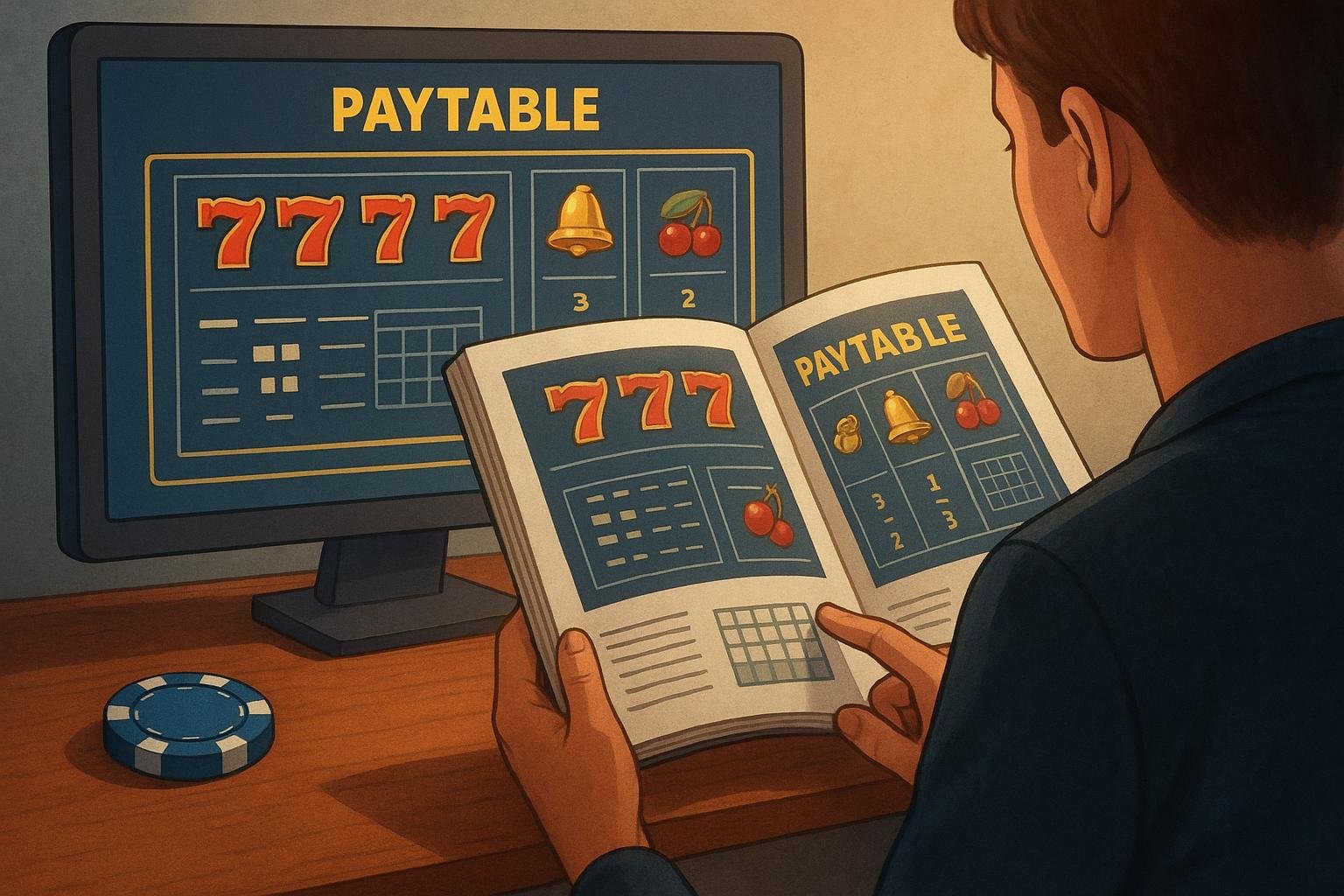
A slot paytable is the game’s rulebook: it explains which symbol combinations can pay, how special symbols work and what features may be available. Taking a minute to read it can prevent common misunderstandings, such as assuming every visible line is active or expecting a bonus to trigger after a certain number of spins.
Paytables vary from one game to another, so don’t rely on rules you remember from a different slot. Open the information or help panel before playing, then check these details in order.
1. Confirm the stake and payout units
Start by checking how the game displays its bet. A total stake may be divided among paylines, ways to win or other game settings. The paytable might show prizes in credits, coins or multiples of the selected bet rather than in a familiar currency amount. Look for an explanation of the unit before comparing figures.
Also check whether the displayed prize applies to the total stake or to a line-level bet. If the explanation is unclear, avoid guessing: the same-looking payout figure can mean different things in different games. A slot’s settings and help pages are more useful than assumptions based on another title.
2. Find out how winning combinations are counted
Look for the game’s explanation of its win pattern. In a paylines game, the rules usually show which paths across the reels count and whether a line must be active. In a “ways to win” game, matching symbols may count across adjacent reels without following a drawn line. Other formats can use clusters or different patterns.
Check where a combination must begin and whether symbols need to appear on consecutive reels. A picture of matching symbols alone may not explain the full rule. The paytable’s diagrams or written instructions should say how the game evaluates a win.
3. Learn what special symbols do
Paytables typically give separate entries for wilds, scatters and other feature symbols. A wild may substitute for certain symbols, but the rules can exclude some symbols or describe exceptions. A scatter may have a different payment condition or be connected to a feature. Treat each symbol’s description as specific to that game.
Read the feature instructions as carefully as the standard prize table. Note what can trigger a free-spin round or other bonus, whether a feature has additional conditions, and how its result is calculated. Don’t assume that a feature works like one you have seen elsewhere.
4. Separate RTP from a spin-by-spin promise
If the game lists a return-to-player (RTP) figure, read it as a theoretical measure used to describe the game over a very large number of plays. It does not predict the result of your next spin or guarantee a particular return during a short session. The figure also does not tell you when a win will occur.
Volatility is another useful term to understand. It broadly describes how a game’s results may be distributed, but it is not a schedule or a promise of payouts. Neither RTP nor volatility can identify a winning moment. For more general context, see common misunderstandings about slot games.
5. Check the details that change your decision
Before starting, scan the paytable for information that affects how you intend to play:
- Bet range: Confirm the available stake settings and the current total bet.
- Win conditions: Check active lines, adjacent reels, clusters or other required patterns.
- Special-symbol rules: Note how wilds, scatters and feature symbols work.
- Feature conditions: Read how bonus rounds begin and what their rules say.
- Prize display: Identify whether amounts are shown in credits, coin values or bet multiples.
- Game-specific notes: Look for exceptions, limits or explanations tucked into the help panel.
A quick example of why the paytable matters
Imagine a player sees three matching symbols and expects a prize. The game may require those symbols to land on an active payline, appear in a particular reel sequence or meet a different pattern shown in its rules. The result might therefore differ from what the player expected, even though the symbols are visible. Checking the win pattern first makes the outcome easier to understand.
If any rule remains unclear, pause rather than increasing the stake to test it. You can also consult a broader guide to common slot-machine questions or review how slot formats can differ. These provide background, but the paytable for the specific game remains the authority on its mechanics.
Make the paytable part of your pre-play check
Reading the paytable won’t change the randomness of a slot or improve the chance of a particular result. Its value is practical: it helps you understand what the game is displaying before you commit money. Check the stake, win pattern and feature conditions, then decide whether the rules and cost fit your limits. If they don’t, choose another activity or stop.


